Useful links
Sign up for our newsletter
Contact us
The Gibson Library
2 King Street
Saffron Walden
Essex CB10 1ES
Telephone: 0345 6037628
(Switchboard – ask for Saffron Walden Gibson Library)
Email: society@gibsonlibrary.org.uk

Some of the content within the timeline are anchor links and therefore will jump you down the page to the section where that content is displayed.
Please note, some of these links may open external websites.
What is now the Gibson Library was founded in 1832 as the Saffron Walden Literary and Scientific Institution. The aims of the Institution were the promotion and diffusion of useful and scientific knowledge. These were to be achieved by circulating books and periodicals amongst the members and subscribers, and then preserving them as a library for the use of the Institution; producing papers on miscellaneous subjects previously agreed by the members; and lastly as soon as practicable, by presenting occasional public lectures.
The Institution was founded by John Player, a retired civil servant from the Naval department, and Jabez Gibson, a Quaker maltster and banker.
Other members included:
Jeptha Miller, a chemist and wine-merchant.
Thomas Spurgeon, a doctor and for many years a town councillor.
Thomas Frye, town treasurer, for many years a churchwarden, was a schoolmaster who conducted an academy at Dorset House, Church Street.
John Thomas Frye, professor of music and organist for 64 years at the parish church.
Joshua Clarke, a maltster carrying on business in High Street.
William Stackwood, a builder’s surveyor who worked opposite Freshwell Street.
John Mallows Youngman, the son of a local bookseller and a noted artist who exhibited many times at the Royal Academy.
James Humphreys, a trustee of the Hill St. Baptist Church for 42 years.
The earliest members were all men, ladies were admitted after 1838.
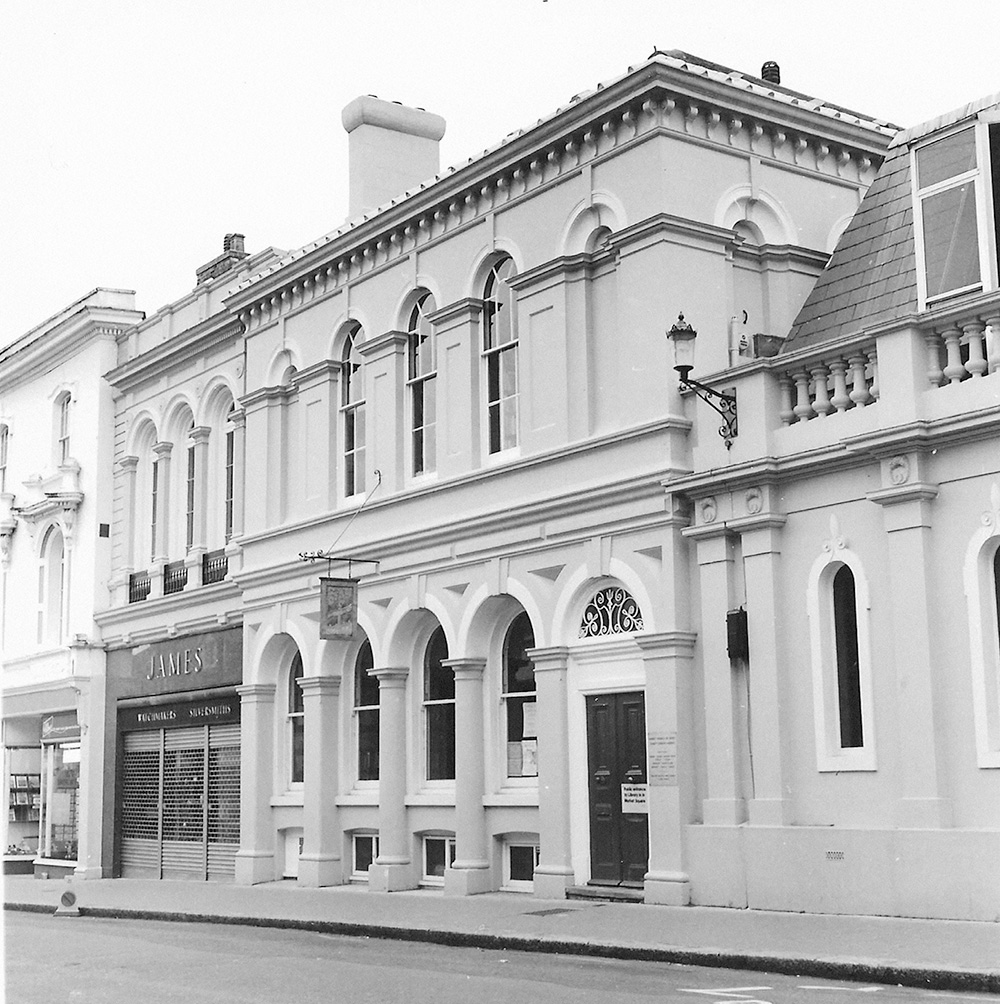
The Gibson Library, 2 King Street, Saffron Walden

This book, (Sketches of Saffron Walden, published in Saffron Walden, by Youngman in 1845,) was by one of the Literary Scientific Institute’s founders, John Player, and illustrated by another, John Mallows Youngman
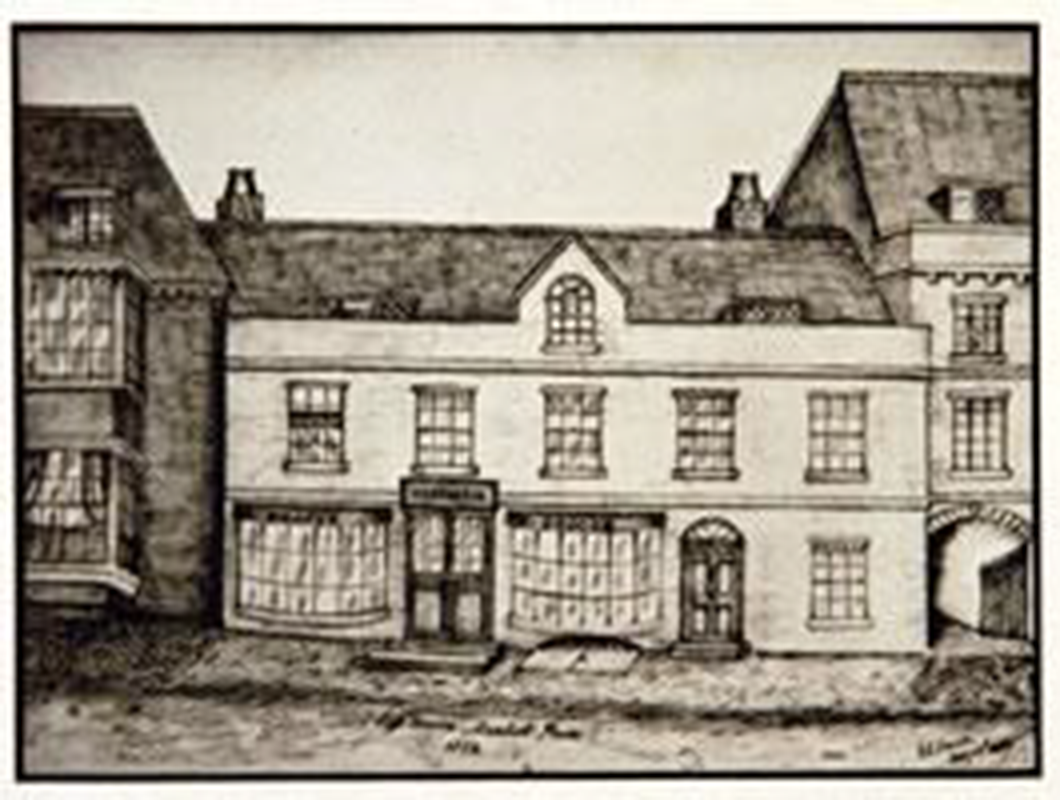
Picture of a building in Market Place, one of the first buildings used by the Institution, (from a drawing of Wiseman’s drapery and grocery shop made by Frank E. Emerson).
In the 1830s the Literary and Scientific Institution met in the Agricultural Hall, which is now the Saffron Walden Museum. At first, just a collection of books donated or purchased by the members, the Library had no permanent home and moved between several buildings. This was possible whilst the Institution had only a few members, but soon became impractical.
In 1853 the Library gained a permanent home at 2, King Street due to the generosity of George Stacey Gibson, a local Quaker banker, botanist and bibliophile. The building was attached to the Corn Exchange in the Market Place (now the Essex County Council Public Library), and the rooms rented by the Institution were on the first floor above the post office and savings bank.
The Gibson Library still occupies the same building but the whole building is now owned by the Library Trust and interconnects with the Public Library.
During the second half of the nineteenth century the membership had been extended to include many more people. By 1864 there were 97 members, by 1914, 320 members.
During the second half of the nineteenth century the membership had been extended to include many more people. By 1864 there were 97 members, by 1914, 320 members.
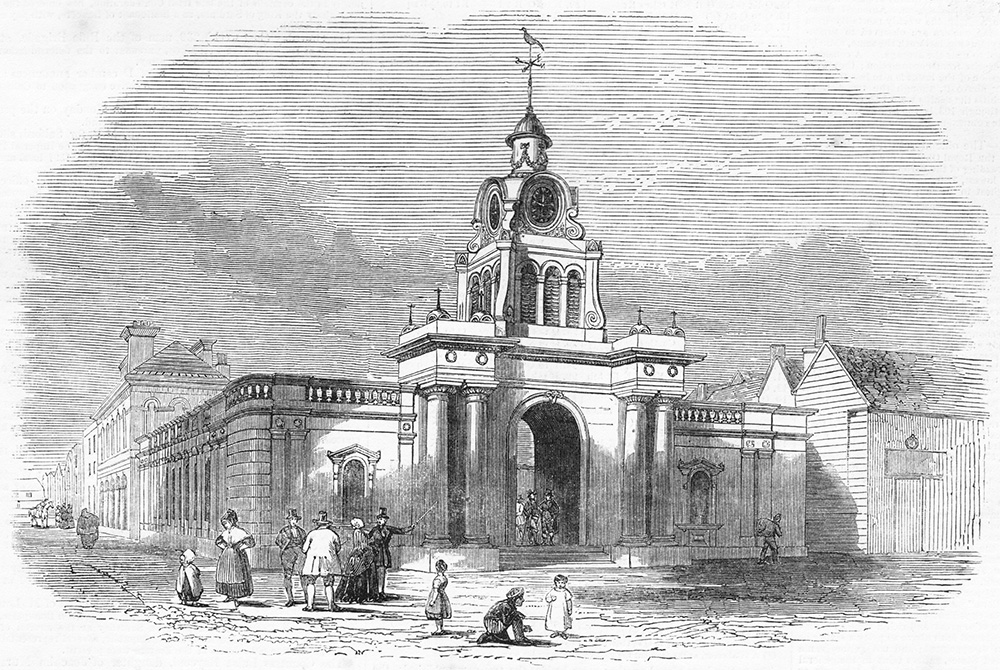
Corn Exchange on Market Place with King Street on left
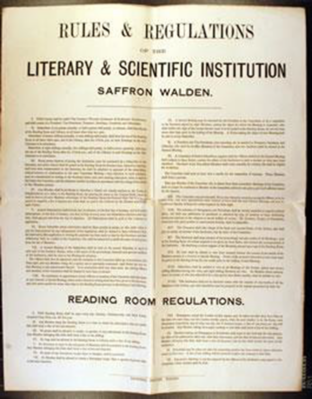
As the Institution became popular, formal rules were needed
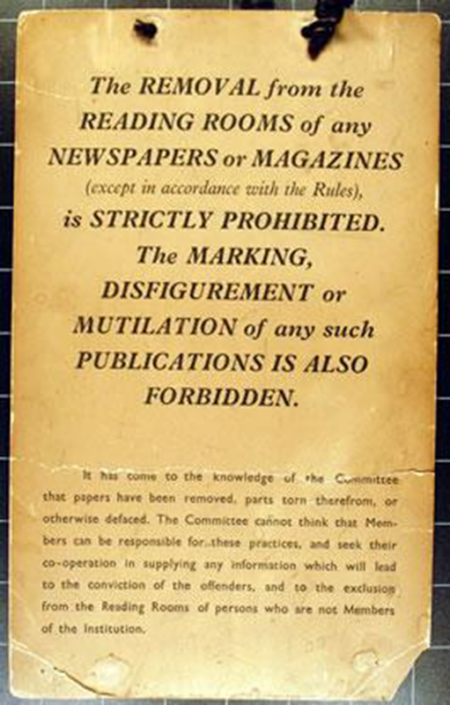
The Committee took a firm line rule-breaking
The Institute held many lectures every year.
In 1866 the list of lectures included: “Ghosts, Faries and Witches” by the Rev M Macfie.
“Ocean Telegraphy” by Edmund Wheeler FRAS of London. [The library has several books on this subject, which was at the cutting edge of Victorian technology.]
“The Inscriptions on Mount Sinai” by The Rev Charles T Forster. [The library has several of his books; Biblical archaeology was a very popular subject at the time.]
“Some of the English authors of the 18th century” by The Rev John Gill.
“Love Courtship and Marriage” by the Rev N Haycroft.
Not everyone wanted to attend lectures and a fund-raising measure, the Institution launched an annual entertainment programme in the winter months.
Many people supported the Library and donated books over the years. The third Lord Braybrooke of Audley End was president of the Society for about fifty years, and after his death his widow, Florence, Lady Braybrooke, presented some two or three hundred volumes to the Library in his memory. Among these are some very fine specimens of early nineteenth-century book-bindings and high quality art books.
One of the greatest benefactors of the Library was George Stacey Gibson, and his family. Gibson purchased many books for the Library from the Agricultural and Horticultural societies to which he belonged, and on his death in 1883 4,000 of his books were left to the Library, and another 3,000 were given by his family in 1922. Gibson also bequeathed 2 & 4 King Street to the Literary and Scientific Institution.
Every year the Gibson Library Society still receives a donation from the Gibson Walden Fund that was set up under GS Gibson’s will to provide money for five organisations in the town, one of which was the Library.
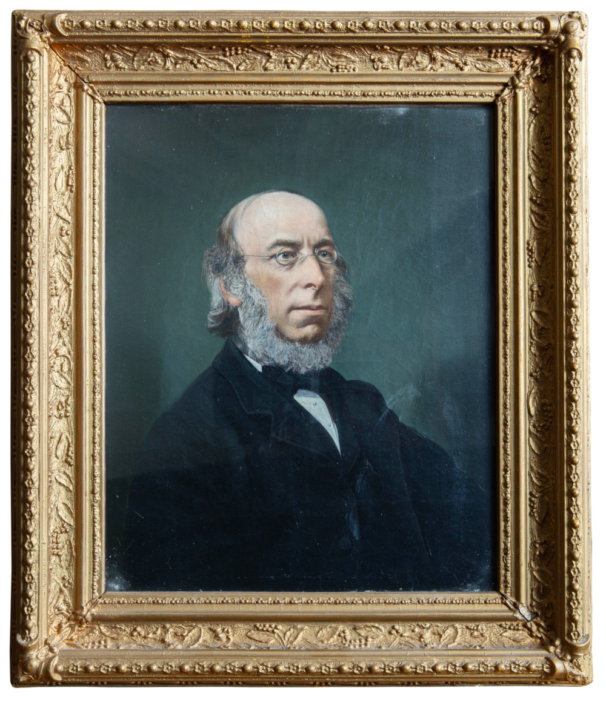
George Stacey Gibson, portrait in the Library Reading Room.
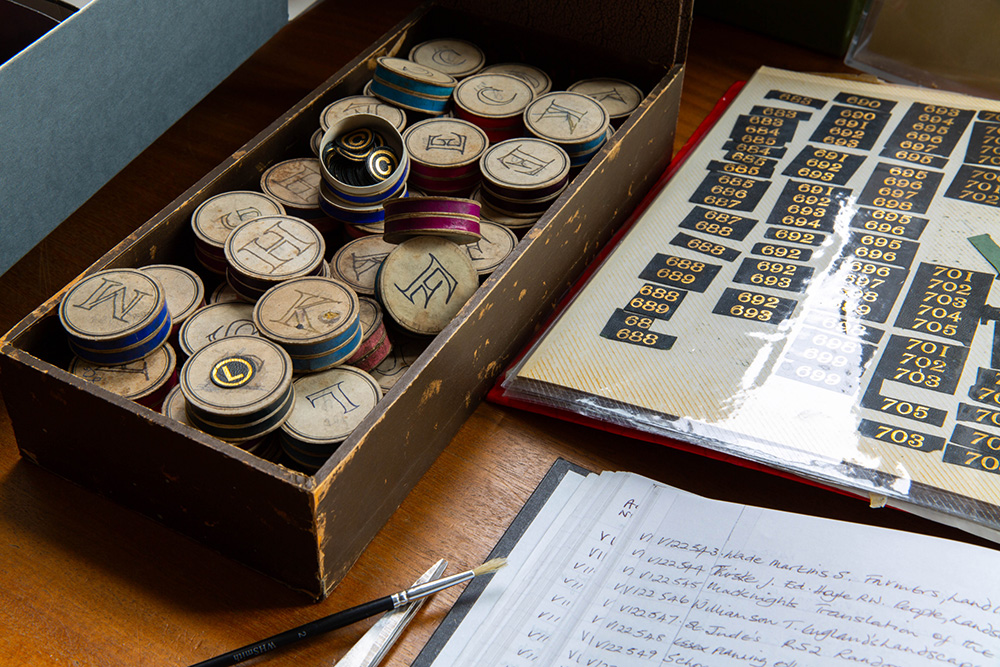
Gibson Library Class letters and numbers
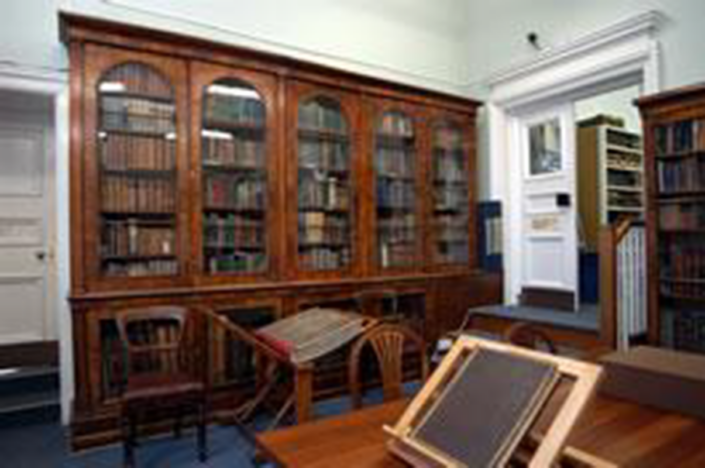
Original bookcases owned by George Stacey Gibson and given to the library with his personal collection of books.
The diagram sketched in the front of the catalogue on the picture opposite shows how George Stacey Gibson’s books were originally arranged at his home, Hill House, in Saffron Walden High Street. The books were catalogued using letters to denote subjects.
A – Biography, Genealogy etc,
B – History
C – Topography (geography) and travel, (Great Britain)
D – International topography
E – Theology, religion and church history
F – Literature (essays, collected works, literary criticism etc.)
G – Arts
H – Social sciences
I – Bibliography, librarianship, printing history etc.
K – Sciences including geology, astronomy and mathematics
L – Botanical science, agriculture, horticulture etc.
M – Natural history
S – Fiction
The same categories were used in the Institution Library and have been retained for the old books in the Gibson Library.
Many of the books in the Gibson Library reflect the Gibson’s interests which were wide-ranging. A keen amateur botanist and author of The Flora of Essex, he collected many books on botany, zoology and natural science.
Until 1907 there was an Honorary Librarian and a Sub-Librarian. The Sub-Librarian had previously been an attendant who doubled as a Museum caretaker. The duties of the Sub-Librarian included unlocking and locking the Institution each day, cleaning, seeing to the fires, recording books taken out by those not entitled to the privilege of holding a library key and collecting subscriptions.
In 1903 William Murray Tuke, who had been a long term Honorary Librarian and President of the Institution, died, and a paid librarian was appointed for the first time, JW Huck.
In 1926 the Librarian, Fisher, went on holiday and never returned. It was found that several of the Library’s valuable books had gone missing at this time and “Fisher’s list” was compiled, listing the missing books. Some of them later turned up in second hand book shops.
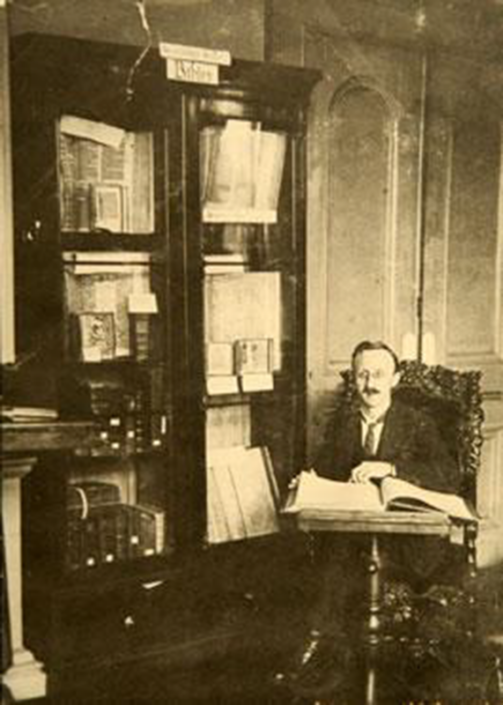
Arthur Ezekiel Gower was the Librarian at the time of this picture, in 1922. He is pictured in front of the Bible bookcases which were part of the Gibson bequest
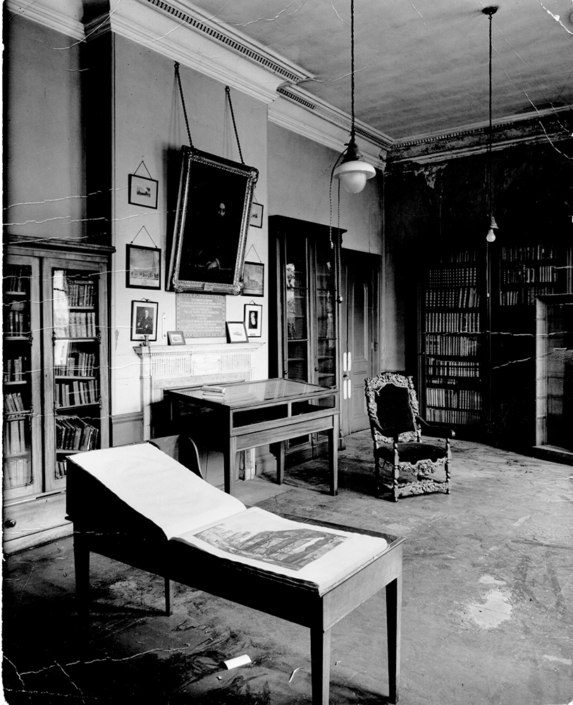
The Library Reading Room c.1967
The diagram sketched in the front of the catalogue on the picture opposite shows how George Stacey Gibson’s books were originally arranged at his home, Hill House, The members of the Literary Institution had always been keen to spread education in the town, and by the 1920’s there were 600 members which demonstrates the local demand for books. Saffron Walden got a free library in 1930 when the County Library was set up in the Institution’s rooms, with volunteers from the Institute providing staffing. After the war the County Library acquired its own premises and the need for a private Institution declined. By the 1960’s the Institution and its Library were in financial difficulties. The County Council was invited to become the Trustee of the collection to prevent it from being broken up and the Insititution was renamed the Saffron Walden Town Library and Victorian Studies Centre.
In 1972 the County Library was given the Corn Exchange building for use as a library and arts centre. In 1975 the County Library expanded into the whole of the Corn Exchange, leaving the top floor of 2 King Street for the sole use of the Town Library.
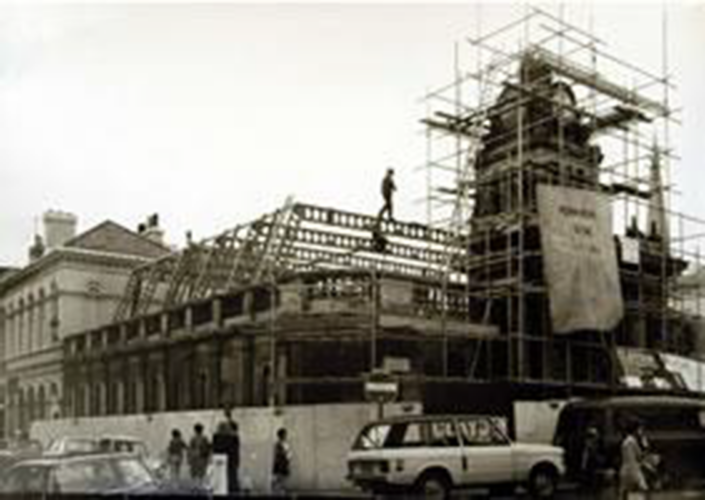
Photograph of the building work done in about 1974 to turn the Corn Exchange into a Library
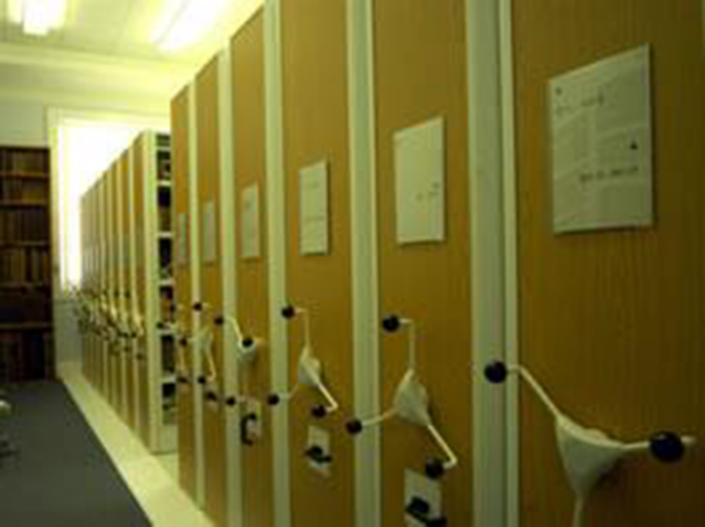
The new rolling stacks in the Gibson Room
This project, which cost £100,000, was undertaken to overcome space shortages and to catalogue the earlier and more valuable books in the Collection. It involved cataloguing more than 15,000 volumes and the introduction of compact shelving to increase capacity. The Gibson and Study Rooms were refurbished and new furniture provided.
The Project was supported by APU, East of England Musuems Libraries Archives Council, The Essex Club, Essex County Council, Essex Heritage Trust, Gibson Walden Fund, The Heritage Lottery Fund, The Pilgrim Trust, Saffron Walden Town Council, The Saffron Walden Town Library Society, The Scarfe Charitable Trust, Stansted Airport Consultative Committee, and Uttlesford District Council.
Hughes, Barbara: The Saffron Walden Literary and Scientific Institution and its role in the Cultural life of the Town. 1832-1930 : Saffron Walden, Unpublished thesis, 1993
Shaw-Ridler, John : The Town Library, Saffron Walden, in: Saffron Walden Historical Journal, new series, vol. 3 no. 5, Spring 2003, p. 19, and, Shaw-Ridler, John : Saffron Walden Town Library, part 2 in; Saffron Walden Historical Journal, new series, vol. 4 – Saffron Walden : Harts
Huck, Thomas Wm : The Origin of the Saffron Walden Literary and Scientific Institution, in: The Essex Review – July 1912 p.125
Huck, Thomas Wm : The Saffron Walden Literary and Scientific Institution, in: The Essex Review – January 1914 p. 28
Searby, Peter : Saffron Walden Town Library – Saffron Walden : Saffron Walden Town Library Society, 2004.