Useful links
Sign up for our newsletter
Contact us
The Gibson Library
2 King Street
Saffron Walden
Essex CB10 1ES
Telephone: 0345 6037628
(Switchboard – ask for Saffron Walden Gibson Library)
Email: society@gibsonlibrary.org.uk

The Saffron Walden Town library contains several hundred biographies of famous Victorians, some written at the time and some later. Some people who were famous during the period are almost forgotten now and vice versa. The Victorians were more interested in the biographies of clergymen, missionaries and Judges than most people are today but our collection includes biographies of actors and musicians along with the politicians, artists, writers and social reformers that might be expected. The photos on these pages are taken from two books in the Town Library collection: Portraits of Men of Eminence in Literature, Science and Art, with Biographical Memoirs edited by Lovell Reeve, with photographs by Ernest Edwards. (London, Lovell Reeve, 1863-7).
Queen Victoria herself reigned from 1837-1901. Her husband, Prince Albert (who was her German cousin), was called a consort, because he was married to the Queen but did not rule himself. Royalty were very popular and well respected during the period.

Engineers
The development of the steam engine by Robert Stevenson led to many great feats of engineering during the Victorian period, including the development of iron bridges and ships, railways and the London underground system. Canals and sewers were also developed. Communication improved with the development of the telephone by Alexander Graham Bell (in 1876) and telegraph (in 1858). A cable was laid under the Atlantic so people could telegraph the United States in 1866 by Isambard Kingdom Brunel’s iron steamship the Great Eastern.
Sir Joseph Bazalgette (1819-1891)
Sir Joseph Bazalgette designed and built the sewage system which provides London with proper drains. It was a huge task, and very expensive, and at first Parliament was unwilling to undertake the project. But when it was completed it was said that Bazalgette made as big an improvement in the appearance of London as Sir Christopher Wren had done before him, and had saved more lives than any other Victorian public official.
Like his friend, Isambard Kingdom Brunel, Sir Joseph was born in England but of French descent. He trained to be an engineer and when The London Metropolitan Board of Works was set up in 1856 to co-ordinate public works throughout London, Sir Joseph Bazalgette was appointed as the chief engineer. In 1853-54 the deadly disease cholera killed 10,738 people in London. No-one knew that it was carried in the water, and most people thought that it was carried in the smells in bad air.
In 1858 the problem of sewers caused a crisis called “The Great Stink of London,” and people decided that something must be done about the smells which arose from the overflowing drains. It got so smelly and people were so scared of contracting cholera that Parliament had to be suspended. Laws were passed giving Sir Joseph Bazalgette power to divert many of the little rivers of London into deeper tunnels which took the water to sewage works to be treated and purified. Huge embankments were built along the Thames to house the sewers and the London underground system which was also being built at the same time. In 1866 cholera broke out again in London’s East End, which was not attached to the system, and people started to accept the idea that it was a water-borne disease. After the sewers were built London was much cleaner and the cholera outbreaks stopped.
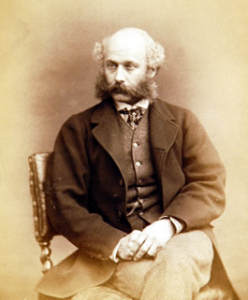
Sir Joseph Bazalgette. From Portraits of Men of Eminence, Vol 6 p75
Scientists 1
The Victorian period saw a huge change in people’s understanding of science. The chemist Humphrey Davy (1778-1829) made mining safer by inventing a lamp which prevented the gas explosions which bare candles had sometimes caused. Advances were made in the theories of gases, spectrum analysis, astronomy and the cosmos, geology, the age of the earth and the discovery of the ice ages, as well as in the most controversial area of all, evolution.
Charles Darwin (1809-1822)
Charles Darwin travelled on a government expedition to the Galapagos Islands to observe the wildlife there. He noticed that each different island had slightly different species of turtles and finches, and he developed a theory of evolution to explain how species developed and changed. This was very controversial because it seemed to contradict the Biblical of creation. Darwin waited a long time before telling other people his theories, but one day his friend Alfred Russell Wallace came to him suggesting his own similar theory so Darwin decided that the time had come to publish. He published his book On the Origin of
Species in 1859 and it caused an outcry. The Town Library has a copy of the book published in 1862 and many other contemporary and modern works about evolution and the relationship between science and religion.
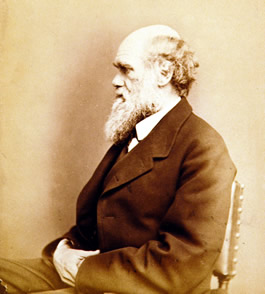
Charles Darwin. From Portraits of Men of Eminence, Vol 5 p49
Scientists 2
Michael Faraday (1791-1867)
Faraday is remembered best for his experiments with electricity and magnetism. Michael Faraday had very little education and was apprenticed to a bookbinder, but after he heard the scientist Sir Humphrey Davy speaking he wrote to him and got a job as Sir Humphrey’s laboratory assistant. In 1820, Hans Christian Oersted and Andre Marie Ampere discovered that an electric current produces a magnetic field. Faraday thought that this probably meant that a magnetic field could be used to reverse the process and produce an electric current. The principle of induction which he thus discovered led to the invention of the dynamo or generator, which creates electricity. Faraday also developed the theory that electricity has fields. The Town Library has a copy of his classic book which was based on a series of six lectures which he gave to children, published in 1860 as The Chemical History of a Candle.
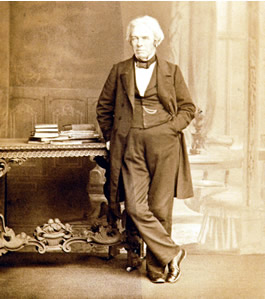
Michael Faraday. From Portraits of Men of Eminence, Vol 1 p147
Scientists 3
Admiral Robert Fitzroy (1805-1865)
Robert Fitzroy is famous for publishing the first weather forecasts in The Times newspaper in 1860. Trained at the Royal Naval College, he entered the Navy in 1819. In 1828 he was put in charge of the ship The Beagle and in 1831 it was he who selected Charles Darwin to sail on the voyage of the Beagle. He became famous when he returned from this long voyage in 1836 and wrote an account of the trip, which included many references to the weather. Years later he was present during some of the debates on evolution that followed the publication of Darwin’s book The Origin of Species.
During his career he was elected a Member of Parliament for Durham in 1841 and became Governor of New Zealand in 1843, but was very unpopular and had to return to England in 1845.
During the long voyage of the Beagle he had became aware of how important it was to be able to predict weather, and in 1854 he was appointed to the newly created post as Head of Meteorology at The Board of Trade (the Met. Office.) A terrible storm of 1859 led to the sinking of a famous ship and encouraged Fitzroy develop an idea for predicting weather by using charts.
He gathered information from ships via the newly invented electric telegraph, which made communication swift enough people could be warned in good time that storms were on the way.
In 1863 Fitzroy published his famous work The Weather Book to explain the science of meteorology. The Town Library has a copy of this and also of his account of the voyages of the Beagle.
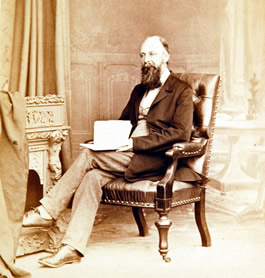
Admiral Robert Fitzroy. From Portraits of Men of Eminence, Vol 3 p53
Communication Reformers
Sir Rowland Hill (1795-1879)
Sir Rowland Hill is famous for inventing the penny black stamp and the post box, ensuring that there was a cheap efficient postal service in Great Britain. The son of a headmaster in Birmingham, he helped teach at the school while he was still a pupil, and became very interested in improving education. He did not approve of physical punishment for children, and thought that they should spend half a day each week learning sports. He also thought that all children should be taught science. His ideas became widely known. He was interested in improving conditions for the poor and was influenced by the ideas of the philosopher Jeremy Bentham. In those days postage was often paid by a person when they received a letter. How much was paid depended on how many sheets of paper were sent and how far they were going. The service was expensive and usually cost more than 4d. One day Hill noticed a poor girl who received letters from her fiance but could never afford to pay the postage, and who used the unopened letters to receive coded signals from the man she loved. Hill thought that it was not fair that the poor could not even afford to send letters to each other. In 1837 he wrote a pamphlet called Post Office Reform, its Importance and Practicability.
It was important that the new system ensured that letters were paid for before they were posted, and that they cost the same amount of money no matter how far they had to travel within the country. In 1840 the penny black stamp was introduced.
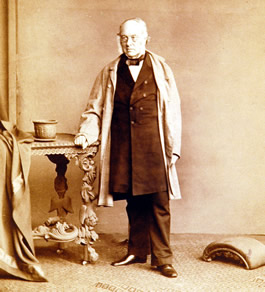
Sir Rowland Hill. From Portraits of Men of Eminence, Vol 6 p5
Geologists and Palaeontologists
Geologists examined the different layers of rock and started to question the biblical idea of a flood. There was much debate about the glacial age, and the Town Library has many books about glaciers and about Switzerland, where people went to study them. People saw that the earth had been formed over many ages and that some very strange creatures had preceded man.
Sir Richard Owen (1804-1892)
Sir Richard Owen was the man who invented the word “dinosaur” and became famous as an expert on these newly discovered fossilized creatures. Although quite poor, Owen gained experience in anatomy by performing post mortems as a surgeon’s apprentice and went on to study anatomy at Edinburgh University and at St Bartholomew’s Hospital, London. He was put in charge of stuffing and cataloguing the Hunterian collection of animal specimens which had been brought from expeditions abroad, and in this way he became an expert on animal bones and comparative anatomy. This made him well qualified to examine and classify many of the strange fossilized bones which fossil hunters like Mary Anning and Gideon Mantell collected and studied.
He noticed that a group of fossil reptiles, including Megalosaurus, Iguanadon and Hylaeosaurus, all had five vertebrae that were fused to their pelvic girdles and had column-like legs instead of the sprawling legs that other reptiles have. He said that all these fossils belonged to a class which he named “dinosaurian” from the words “deinos” meaning “terrible” and “sauria” meaning “Lizard.”
Richard Owen was later a fierce opponent of Darwin and Gideon Mantell. He did not believe in evolution; his papers on dinosaurs were published partly in an attempt to forestall early ideas about evolution, which he thought were ungodly. Ironically, his work actually helped support the evolutionists arguments.
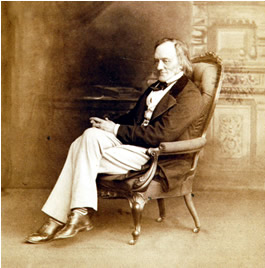
Sir Richard Owen. From Portraits of Men of Eminence, Vol 1 p41
Artists
The Victorian artists who are best remembered today are the Pre-Raphaelites and their friend William Morris. The Pre-Raphaelites included Dante Gabrielle Rosetti, William Holman-Hunt, Edward Burne-Jones and John Millais. Rossetti’s sister Christina, the poet, influenced the group and many women artists such as Rossetti’s wife Elizabeth Siddal, Jane Benham Hay, Ford Maddox Brown’s daughters Lucy and Catherine and others.
John Everett Millais (1829-1896)
Millais was born in Southampton, of French descent. He trained at the Royal Academy and in 1848 he founded the Pre-Raphaelite brotherhood with his friends Dante Gabrielle Rosetti and William Holman-Hunt. Millais’s painting “Christ in the House of his Parents” caused a storm when it was exhibited at the Royal Academy in 1849. Charles Dickens wrote that Christ looked like “a hideous wry-necked, blubbering, red-headed boy, in a bed-gown.” The Pre-Raphaelites did not approve of the art of the middle and high renaissance and believed that the only truly great art came from the time before the 16th century Italian painter Raphael.
Like their predecessors, they used biblical images and images from classical mythology, but they tried to portray them in a more realistic and less idealized way. Their paintings were based on real landscapes and real models, and they paid close attention to the accurate portrayal of colour and detail. The art critic John Ruskin defended the group. At a time when science seemed to threaten religious belief, nature was seen as a reflection of God, and Ruskin had argued that art should reflect nature. Whilst painting Ruskin, Millais fell in love with Ruskin’s wife, Effie, and he married her in 1855 after her marriage to Ruskin was annulled. Millais’s other paintings include “The Boyhood of Raleigh” and “Autumn Leaves.”
Later developments in the group included the poetry of the Rosettis and the Arts and Crafts Movement of William Morris, (1834-1896) who set up his own company to design furniture and wall paper. He was one of the founders of the Socialist League and later in life he built his home Kelmscott Hall, designed by Philip Webb and furnished by works of their friends. He also started a publishing firm, the Kelmscott Press, to publish books according to the standards of medieval craftsmen. William Morris’s designs for wallpaper and material are still very popular today.
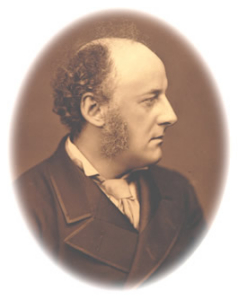
Sir John Everett Millais. From Men of Mark p19
Medicine and Physicians
People studied cells and tried to see what made people ill. They began to acknowledge the existence of micro-organisms and to start to fight against their effects. In 1865 hospitals began to introduce antiseptics into the operating theatre, and the effects were startling. Vaccinations had been discovered several years before and became used increasingly during the period. Doctors started using anaesthetics during operations, and these became popular when even Queen Victoria used them during childbirth, and the first women doctors became qualified.
Elizabeth Garrett Anderson (1836-1917)
Elizabeth Garrett Anderson was Britain’s first woman doctor. At first she trained as a nurse in London, but her professors helped her and she studied in her spare time and was allowed to work as a medical practitioner when she was 29, even though not fully qualified. She finally had to go to Paris and take her medical exams in French. Elizabeth Garratt Anderson fought for the right for women to become doctors and in 1876 the Government passed the Medical Act, which allowed this to happen.
Mary Blackwell (1821-1910)
Mary Blackwell was the first person to qualify as a doctor in the United States. It was very unusual for women to be given the same education as boys, but Blackwell’s father believed his daughters should learn Latin, Greek and Mathematics, as well as the needlework and French that other rich girls were taught. In 1832 the family emigrated from Bristol to America. Mary did not want to be a housewife or a teacher and decided to study medicine. Mary studied medicine as a private pupil of prominent doctors in Philadelphia. She was braver when dissecting animals than many of her male colleagues but still no medical school would accept her because she was a woman. In 1849 she finally graduated and thousands of people came to watch the ceremony in Geneva. She wanted to go on to study surgery at Paris, but was not accepted, so she worked in a Paris hospital as a student midwife. Whilst working there she caught an infection and lost the sight in one of her eyes, which meant that she could no longer hope to be a surgeon. In 1851 she returned to New York and started a small practice there.
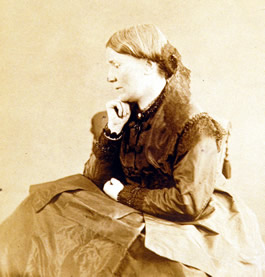
Mary Blackwell. From Portraits of Men of Eminence Vol 5 p125
Foreign Travel and Exploration
The Victorian period was a time when there was great pressure to discover new territory and to spread the British Empire and Christianity. Many missionary societies had been started after the 1790’s and missionaries like David Livingstone in Africa and James Chalmers in New Guinea were heroes and inspired many others to follow their example. Britain fought military campaigns to gain territory in India and Southern Africa and to influence affairs in the Crimea.
Sir Richard Francis Burton (1821-1890)
Richard Burton was a linguist who translated 30 books including an unexpurgated version of the shocking Karma Sutra. He wrote books about his travels to search for the source of the Nile, discovering Lake Tangyanika. In many ways he is an example of a nastier side to the Victorians, writing racist works attacking Jews and Black people. He wrote on ethnology, studying different types of people in a supposedly dispassionate way, but in fact reducing their characteristics to stereotypes. His writings were very popular.
When he was young he travelled Europe with his parents, shot at stained-glass church windows at the age of 10 and visiting French and Italian brothels and taverns as a teen-ager. He was educated at Oxford University but got expelled for gambling at horse-races.
He joined the army of the East India Company and studied Hindi, Arabic and other languages. Whilst in India he was sent in disguise to write a report on brothels, but when he reported that many of the customers were English soldiers he was sent home in disgrace. He wrote three books about his experiences in India and one about the Muslim holy cities of Mecca and Harar (in Somalia), which he visited in disguise (Only Musims are supposed to visit these cities and he is thought to be the first Non-Muslim to have done so).
In 1854 he returned to Somalia with John Speke, to search for the source of the Nile, which they discovered on a second expedition during 1857-58, although the two argued and disputed the source. He became famous for this feat when he returned England. He also visited America, where he studied Mormons, Brazil and the Middle East and published a volume of poems. In all his travels of the world he learned 25 languages, 40 including various dialects. When he died his wife burned all his papers and wrote a glowing account of his life saying that he was a good Catholic and missing out all the unpleasant material.
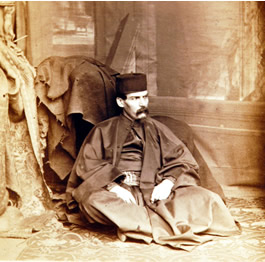
Sir Richard F. Burton. From Portraits of Men of Eminence vol 3 p73
Writers
During the Victorian age printing became cheaper and many people could read which resulted in an explosion of literature. “Belles Lettres” or essays in which authors such as Ruskin and Thomas Carlyle gave their opinions about current debates and about art and literature, were more popular than they are now. Other novelists included Anthony Trollope, (1815-1882). Earlier poets included William Wordsworth (1770-1850), The market for childrens’ books began to grow, supplied by authors such as Lewis Carrol (Charles Dodgson, 1832-1898), who wrote Alice in Wonderland and Rudyard Kipling (1865-1936) who wrote The Jungle Book, Kim and books for adults as well.) Poets were idolised by the public as film stars are today, and included Robert Browning and Elizabeth Barrett Browning, Christina Rossetti, Shelley, Keats and Byron.
Charles Dickens (1812-1870)
Charles Dickens wrote stories which often focused on the lives of poor people. He knew what it was like to be poor because his father often owed money and was even sent to prison because of his debts. Dickens was a journalist at first and wrote about parliamentary debates, but he soon started writing stories that the papers published in weekly instalments. People were shocked when they read what life was like for London’s poor.
They were very touched by the stories and eagerly awaited the next instalments so Charles Dickens became rich and famous in England and America. Some of his best known books are Great Expectations, David Copperfield, Nicholas Nickleby and Oliver Twist all about the lives of boys growing into young men in England. He also wrote A Christmas Carol, a story about the miser Scrooge, one of the most notorious characters in literature.
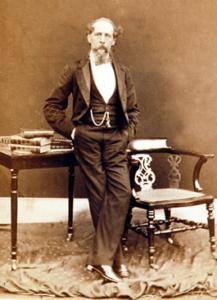
Charles Dickens. From Portraits of Men of Eminence Vol 4 p93
Politicians
The voting system changed considerably during the Victorian period. At the beginning of Victoria’s reign the right to vote depended on how much land you owned. An act of 1884 gave the vote to all men over twenty-one, (although women still could not vote). This meant that what poorer people wanted became more important in politics. In 1893 an Independent Labour party was founded. Until 1858 only people who possessed a certain amount of property could become Members of Parliament. William Gladstone (1809-1898) was Prime Minister four times between 1868 and 1894. Other political leaders included Peel, Palmerston, Disraeli and Salisbury
Benjamin Disraeli (1804-1881)
Benjamin Disraeli was Queen Victoria’s favourite Prime minister. He was Jewish by birth and did not go to a famous school and these things made it difficult for a person to become successful in Victorian society. However he wrote two novels, Coningsby (1844) and Sybil (1846) and joined the Conservative party, getting elected to parliament in 1837. He tried to improve the lives of the poor, and in 1867, as Chancellor of the Exchequer, he passed the Reform Act which allowed more people to vote. He also encouraged better housing for workers and cleaner conditions in cities. In 1875, when he was Prime Minister, Britain gained control of the Suez Canal, which provided a quick route to India. He was Prime Minister in 1868 and later from 1874 (when he was seventy) to 1880. He died in 1881.
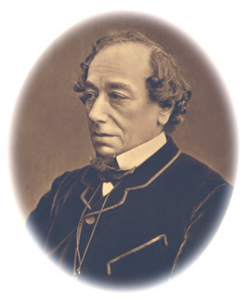
Benjamin Disraeli, Earl of Beaconsfield. From Men of Mark fifth series p1
Social reformers
Social conditions for the poor in Victorian times were very difficult due to the effects of the industrial revolution. Catherine Booth (1829-1890) was a social worker before she married William Booth (1734-1820) and together they started the religious organization The Salvation Army. Women in this organization had the same rights as men and together they tried to combat the poverty, alcoholism and homelessness that they found in London. Their organization spread across the world. Josephine Butler (1828-1906) worked with prostitutes in Liverpool. She said that the laws against prostitution were unfair because they only penalised women, and she started a ‘Great Crusade’ eventually managing to change the laws. Henry Mayhew published books of his interviews with the London poor.
Many more people went to school by the end of the Victorian period. In 1837 the only schools that poor children could go to were those run by charities, often called ragged schools. Children often worked in factories in the mornings and went to school in the afternoon. In 1844 The Factory Act was passed which insisted that children under thirteen should only work six and a half hours a day. In 1870 the Education Act set up school boards to provide “elementary” education for children aged five to ten, and in 1891 elementary education was made free. Hundreds of schools were built in the 1870s to educate poor children.
Bessie Rayner Parkes (1829-1925)
Bessie Parkes was the daughter of a solicitor and the grand-daughter of the famous scientist, Joseph Priestly. In 1846 she met Barbara Bodichon, who was the headmistress of a progressive school in London. They shared an enthusiasm for women’s rights, and together wrote a pamphlet, Remarks on the Education of Girls in 1856. In 1858 they founded a journal, The Englishwoman’s Review. Bessie Parks edited the journal and in her articles campaigned for the education of women in universities and medical schools. In 1886 she wrote Essays on Women’s Work, arguing that the law was biased because it treated women as if they should be supported by their fathers or husbands and did not need to be educated to do professional work.
In 1866 the two women together formed the Woman’s Suffrage Committee, to campaign for women to have the right to vote. In 1867, against the advice of her family and of Barbara Bodichon, Parkes decided to get married to a Frenchman, Louis Belloc, who was already seriously ill. Sadly Belloc died in 1872.
Both her children were authors who were not interested in women’s rights. Her daughter was the novelist Marie Belloc-Lowndes and her son was the famous anti-feminist Hillaire Belloc. The Town library has a biography of Bessie Parkes, and many books by Hillaire Belloc, mostly concerning his musings on life as he wandered around England.
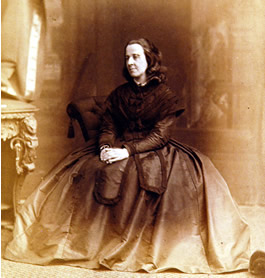
Bessie Rayner Parkes. From Portraits of Men of Eminence Vol 5 p43
Historians
The Victorian age demonstrated an increasing in interest in history, which had first become popular during the age of their heroes and predecessors, the Jacobeans. The rise of interest in religion during the later Victorian period was translated into an interest in the religious debates and disputes of their ancestors, especially during the Reformation and Civil Wars. The antiquarianism of earlier periods led to the foundation of archaeology as a science.
James Anthony Froude (1818-1894)
Froude was educated at the prestigious Westminster school and at Oriel College, Oxford. He went on to become a fellow at Exeter College, Oxford. As a supporter of the high church Oxford Movement he helped Cardinal John Newman to write Lives of the Saints, and he became a deacon in 1845 but he later became influenced by the ideas of Thomas Carlyle (he subsequently wrote a biography of Carlyle,) and abandoned this religious position. In early Victorian times university posts were held by single religious clergymen so the college made him resign from his job. He lived by writing articles for journals, including Frazer’s Magazine and The Westminster Review.
Soon he began to write history books and they proved remarkably popular. He rejected the cold scientific style of history writing of his predecessors, and said that history was drama and should be written as such. He wrote history which focused on the personalities of the main protagonists. He wrote in an exciting way, but was not always accurate, and an author called Freeman constantly attacked his work in the press. Froude’s view of history stemmed from his idea that the Reformation was a great force for good which spread progress and enlightenment throughout Europe, and Henry VIII was his hero. In addition to writing books he worked as an editor on Frazer’s Magazine. Essex Libraries hold over fifty different editions of his books, as well as two biographies of the historian.
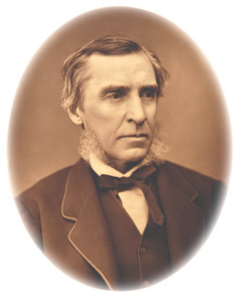
James Anthony Froude. From Men of Mark Gallery of Portraits p15
Religious leaders
During the later Victorian period, perhaps as a reaction against the scientific controversies of the time, there was a revival of interest in religion. At one extreme this was expressed in the High Church Oxford Movement, led by John Keble, who fought for the rights of Catholics and the need for worship to restore a sense of reverence John Newman, (1801-1890) tried to show that the Church of England had always steered a middle course between protestant fundamentalism and Catholicism. He converted to Catholicism in his later years and became a Cardinal. Supporters of the group, J. M. Neale and B. Webb, developed an interest in church architecture and in religious ritual.
By contrast fundamentalism became popular too and there was growing support for Evangelicalism, which stressed literal belief in the Bible and that people could only be saved from hell by believing in God. Preachers like the Baptist minister C. H. Spurgeon (1834-92) became very popular, and their sermons could be bought as pamphlets and in books. Although many people belonged to the Church of England, there were many other denominations such as the Baptists and Methodists which grew in popularity during the period, and several new denominations such as the Salvation Army and the Plymouth Bretheren were founded.
Frederick Dennison Maurice (1805-1872)
FD Maurice, as he was known, was the founding father of the Christian Socialist movement. Educated at Trinity College, Cambridge, he wrote articles whilst a student for The Metropolitan Quarterly Magazine and The Westminster Review. He later became editor of the well respected journal The Athaneum.
Maurice thought it was wrong that different types of Christians should dislike each other so in his most important book, The Kingdom of Christ (1838) he argued that each denomination held their own particular part of the truth, and should be listened to and treated as equals. He also argued that it was important for Christians to be involved in politics and to try to improve the social conditions of those around them. He was strongly in favour of improving education for the poor and for those who did not agree with the Church of England and so were not allowed to attend Universities.
Maurice was made a professor of religion at King’s college London in 1840. People in England had been shocked by the French revolution and were afraid that the poor in England might rebel. Maurice formed the Christian Socialist movement with his friends the writers Charles Kingsley and Thomas Hughes. It was designed to be an alternative to the humanistic socialism of the day, and to help the poor without causing a revolution.
However people thought that this sounded very dangerous, and Maurice was forced to resign his professorship in 1853. He helped start the London Working Man’s College in 1854 and in 1866 he was appointed Professor of Moral Philosophy at Cambridge University.
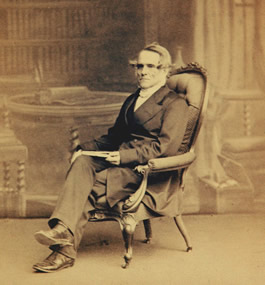
Frederick Dennison Maurice. From Portraits of Men of Eminence vol 1 p141
Naturalists
Victorians were very interested in nature and many ladies and gentlemen studied animals and plants as a hobby. People were interested in classifying all the known species and hundreds of books were published and bought on such unlikely subjects as sea anemones, shell fish and even plankton. George Stacey Gibson was particularly interested in botany and wrote a work on the Flora of Essex. The Town Library has hundreds of books which formed his botanical and zoological collection, many of them beautifully illustrated.
William Jackson Hooker (1785-1865)
Many of the scientists during the early Victorian period did not have paid posts but were rich gentlemen. William Hooker was left some money by his godfather and could afford to support himself whilst he studied mosses and wrote a book on them while he was still young. By the time he was twenty one he was elected a fellow of the Royal Linnean Society, a society of naturalists who were interested in the classification of animals and plants. Having established his reputation, he was offered paid employment when the botanist Sir Joseph Banks sponsored him to travel to Iceland and collect plants there. In 1820 he was made Professor of Botany at Glasgow University and in 1841 he was put in charge of running the Royal Botanical Gardens at Kew.
Hooker enlarged the gardens and arranged for plants to be sent there from all over the world. He also built several large glasshouses where plants could grow in tropical conditions. After his death his son, Joseph Hooker, took over his post and continued the traditions set by his father.
Photographer, Ernest Edwards (1807-1903)
Very little is known about Ernest Edwards except that he owned the Photogravure photography company at 20 Baker Street, London. He managed to photograph an astonishing number of eminent people and soon after the publication of the book he migrated to the United States in 1885, where he is remembered for his beautiful cityscape photographs. He was an inventor and invented the heliographic process, and clever cameras to take wide angle photographs. Ironically no photographs of him seem to have survived.

 Chairman’s report to the Annual General Meeting for the year ended 31st...